How to Choose the Right Date Farm? 8 Factors Every Buyer Should Check Before Contracting
Choosing a date farm should not depend on the price per kilogram alone. When you purchase dates in commercial quantities, you are not simply buying a ready-made product; you are choosing a partner capable of providing the required quality, specifications,…
Choosing a date farm should not depend on the price per kilogram alone. When you purchase dates in commercial quantities, you are not simply buying a ready-made product; you are choosing a partner capable of providing the required quality, specifications, and quantities consistently, with the ability to clarify the product’s source and its journey from the farm to the supply stage.
This becomes even more important when the purchase is intended for export, distribution, wholesale, or food manufacturing. The product may look good when receiving a single sample, but the real challenge begins when you need to obtain the same level of quality in repeated shipments, with clear specifications and according to the agreed deadlines.
Therefore, before comparing date suppliers or date farms based on price alone, there are a number of factors worth taking into consideration.
1- Start with the variety that suits your market
There is no single type of date that can be considered suitable for every market or every use. Choosing the variety should begin with the market you are targeting, the nature of the product you want to offer, and the specifications your customers are looking for.
If you are purchasing dates for distribution in a particular market, it is important to know whether the supplier can provide the suitable variety, at the appropriate stage of ripeness, and according to the specifications required by the market. This point becomes increasingly important with varieties that can be handled and marketed at different stages of ripeness.
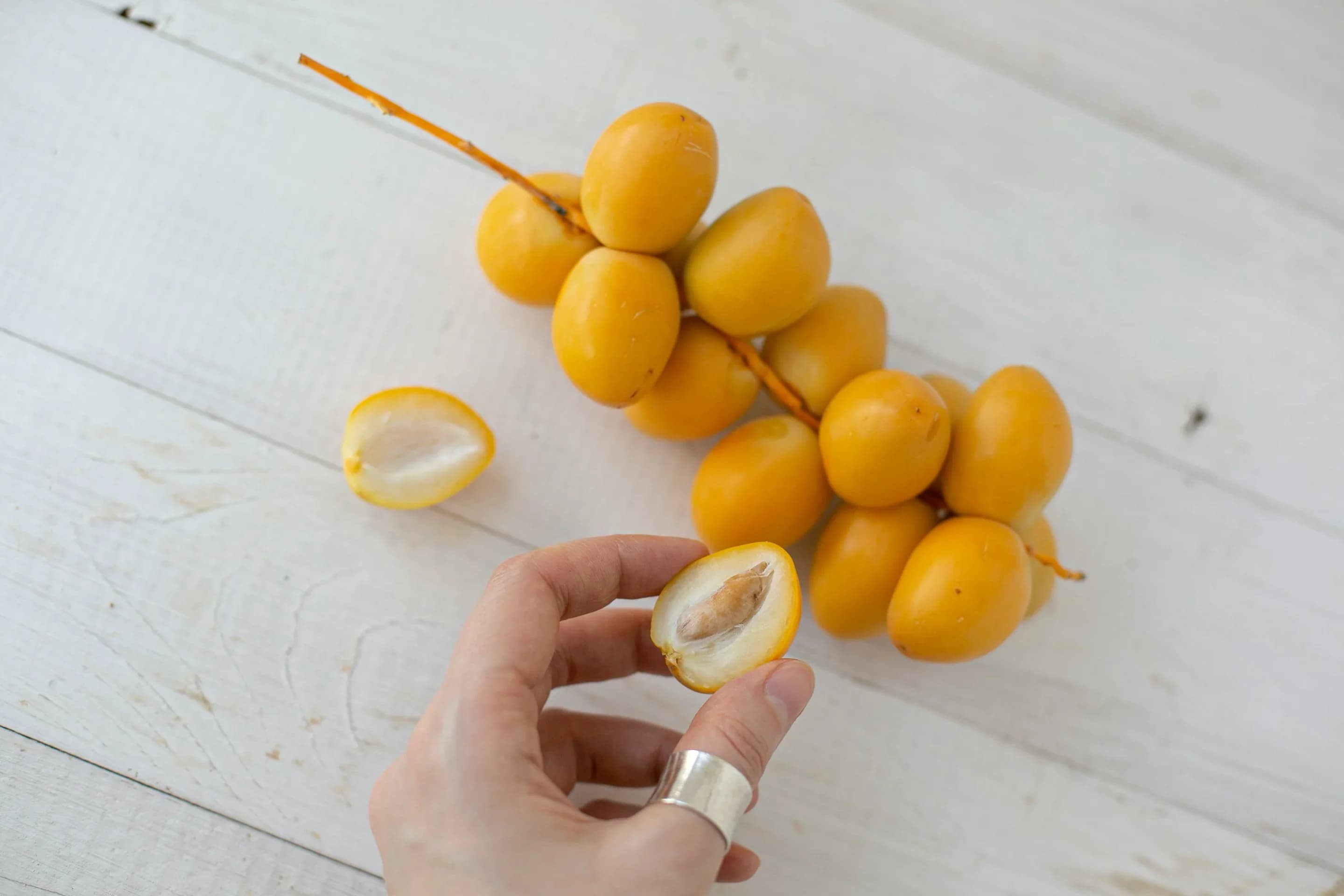
For example, Barhi dates can be marketed at different stages of development. Therefore, determining the suitable stage for the product is not merely an agricultural decision; it is also connected to the target market, the supply method, and the final use of the product. FAO guidelines explain that the appropriate harvesting stage varies according to the variety, climatic conditions, and market demand.
For this reason, do not ask the supplier only: What types of dates do you provide? Also ask: What specifications and stage can you provide for this particular market?
2- Do not judge quality based only on the first sample
A good sample is important, but it is not sufficient on its own to make a long-term purchasing decision.
The commercial buyer needs to know how capable the supplier is of maintaining a consistent level of quality across different shipments. The problem usually does not appear when the sample is excellent; it appears when the specifications of the next shipment differ clearly from those of the previous shipment.
Therefore, you should view quality as Consistency, not merely as the result of a single test.
Size, color, stage of ripeness, texture, moisture level, defect rate, and sorting and packing methods are all factors that can affect the commercial value of dates. FAO references on dates emphasize the importance of quality control, documentation, sorting, grading, and handling the product throughout the post-harvest stages.
When evaluating a new supplier, do not ask only about the best quality they can provide; ask: Can they maintain this quality consistently?
3- Know the source of the dates before buying them
Asking about the source of the dates is not merely a question about the name of the country or region. For the commercial buyer, knowing the source helps create a clearer picture of the product and the supply chain from which it came.
The clearer the information related to the product’s source, the easier it becomes to deal with quality and documentation requirements and to follow up on any issue that may arise at one of the stages of the supply chain.
This is where Traceability comes in. Traceability means the ability to identify the source of the product and follow the information associated with it throughout the stages of production and handling. It is one of the tools that support quality and safety systems and trust in the supply chain.
4- Ask what happens on the farm before harvest
It is easy for the buyer’s attention to focus on what happens after the dates arrive at the packing station, but product quality begins long before that.
Farm management methods, palm monitoring, harvest timing, and crop handling are all parts of one chain. FAO confirms, in its latest efforts related to Egypt’s date sector, that harvest and post-harvest stages are decisive factors in product quality and market value, and that improving quality requires treating the value chain as an interconnected system from the field to the market.
Therefore, when choosing a supplier, it is useful to know whether they are merely an entity that purchases and resells dates, or whether they have direct control and knowledge of the early stages of the production chain.
This is where the farm itself becomes part of the purchasing decision.
5- Understand how harvest and post-harvest operations are managed
Even a good crop can lose value if the harvest stage and what follows are not managed properly.
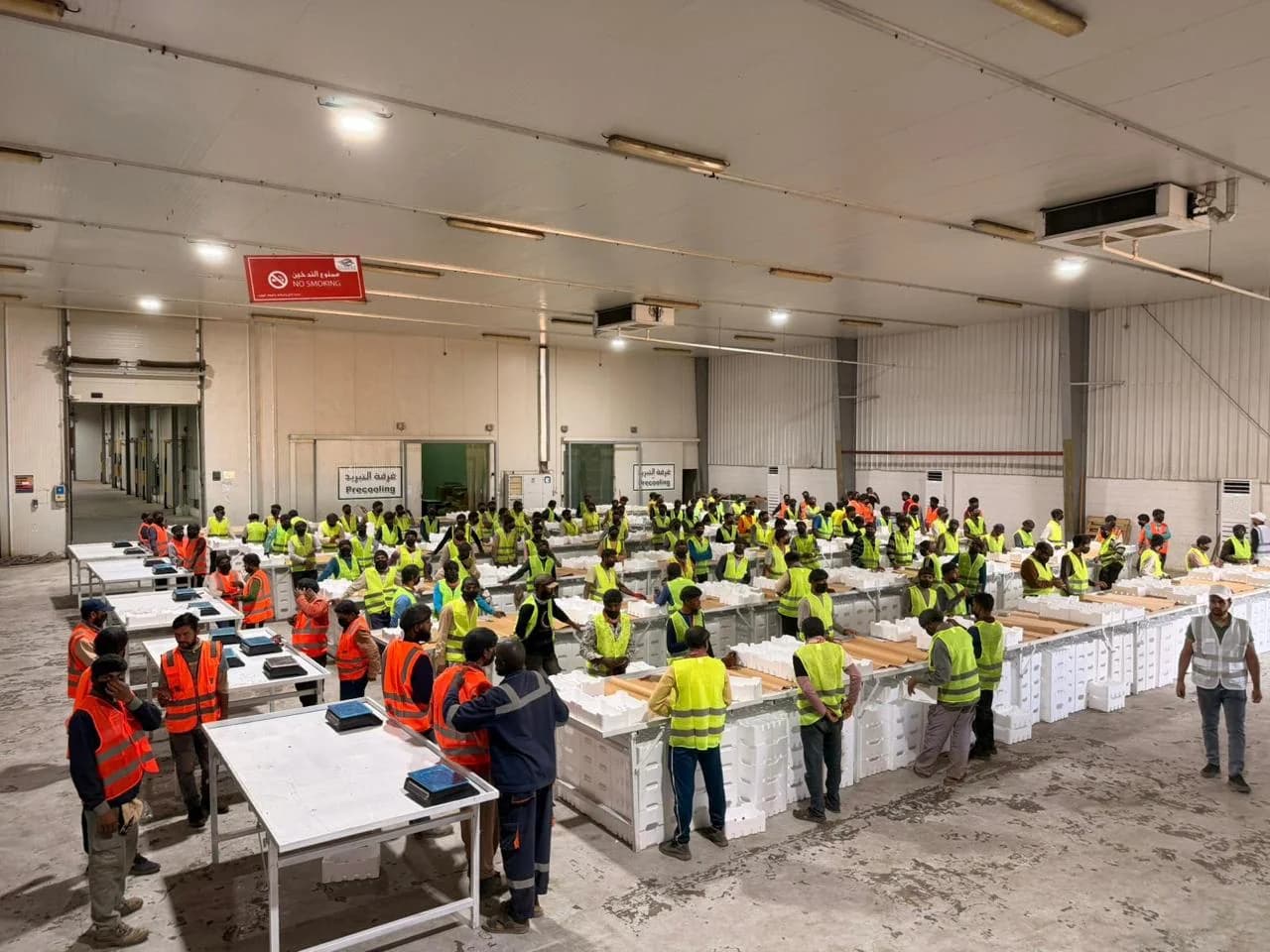
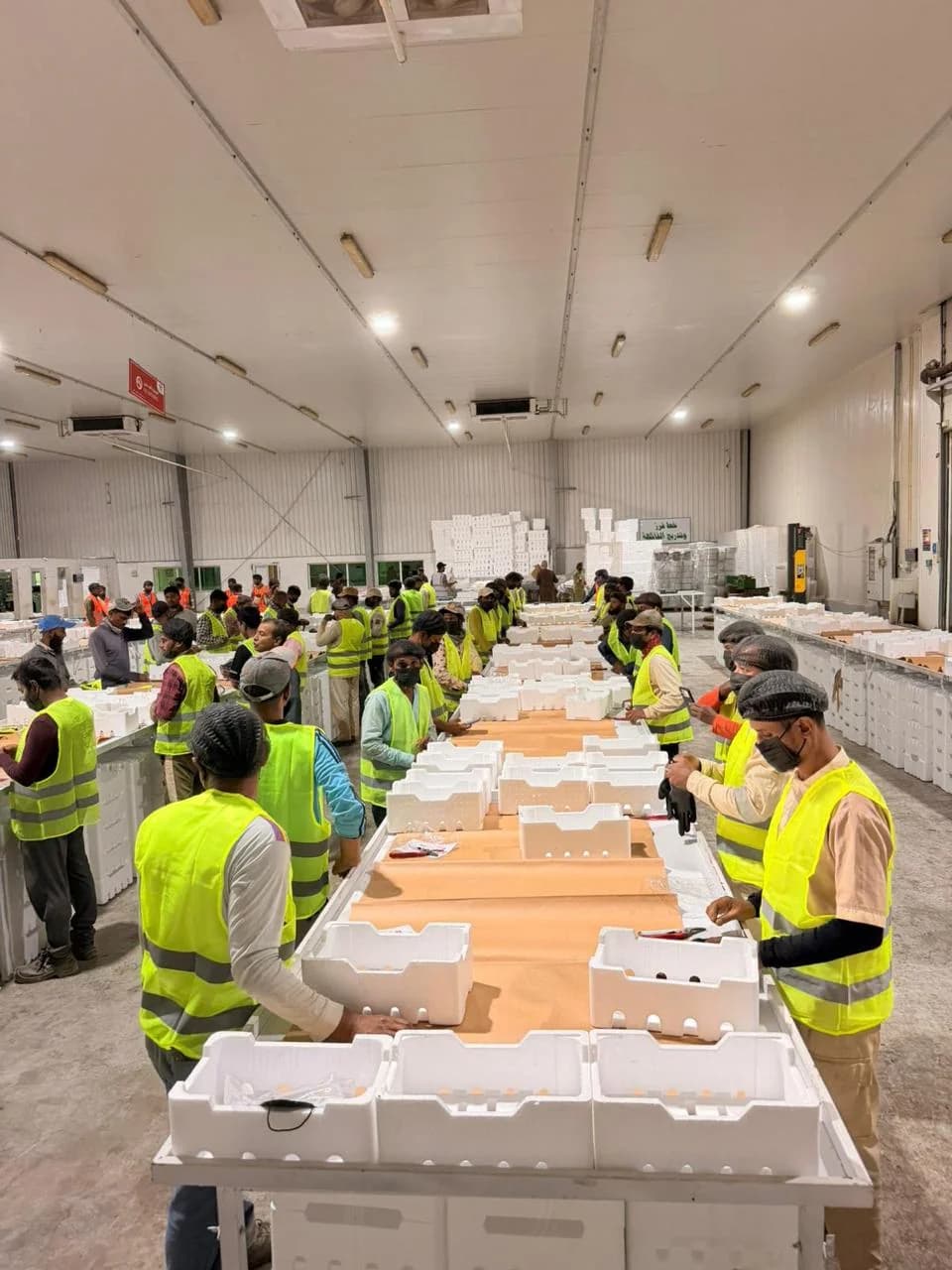
Timing, collection methods, transportation, sorting, storage, and packing are all stages that can affect the quality of the final product. For dates, harvesting and fruit-handling requirements vary according to the variety, stage of ripeness, and marketing method.
This means that the question to the supplier should not be only: Are the dates good?
The better question is: How do you maintain the quality of the dates from the moment of harvest until they are prepared for supply?
The answer to this question can reveal a great deal about the supplier’s level of supply-chain management.
6- Make sure the supplier can meet your commercial needs
A supplier may be capable of providing an excellent product, but that does not necessarily mean they are the right supplier for your business.
If you work in distribution, export, or manufacturing, you may need specific quantities, consistent specifications, clear supply schedules, and perhaps different packing or shipping requirements.
Therefore, you should know from the beginning whether the supplier is capable of handling the order volume you need, rather than merely providing one sample or one shipment.
This is about Supply Reliability just as much as it is about product quality. For the commercial buyer, a good supplier is not someone who can provide a good product once, but someone who can build a dependable supply relationship.
7- Do not overlook specifications and packaging
Packaging is not merely the product’s external appearance. In the case of dates, the package plays a role in protecting the product during handling, transportation, and storage, and it must also be compatible with the nature of the market and the customer’s requirements.
The FAO guide on harvesting, packing, and marketing dates points to the importance of packaging in protecting the fruit from damage as it moves from the preparation stage to the consumer. Packaging requirements may also differ according to the nature of the market and the customer.
Therefore, before contracting, it is important for the product and packaging specifications to be clear: package type, weight, size or grade, preparation method, and any special requirements of the target market.
The clearer these specifications are from the beginning, the lower the chances of differing expectations between the supplier and the buyer.
8- Ask about Traceability before asking about the price
Price is certainly important, but it is not the only factor that determines the actual cost of purchasing.
When you are unable to know the product’s source or track the information associated with it, dealing with quality problems or shipment variations becomes more difficult. When clear records and information about the product and its journey are available, it becomes easier to identify the source of the problem and deal with it.
At MAP Trade, we place this idea at a very early stage of the product’s journey.
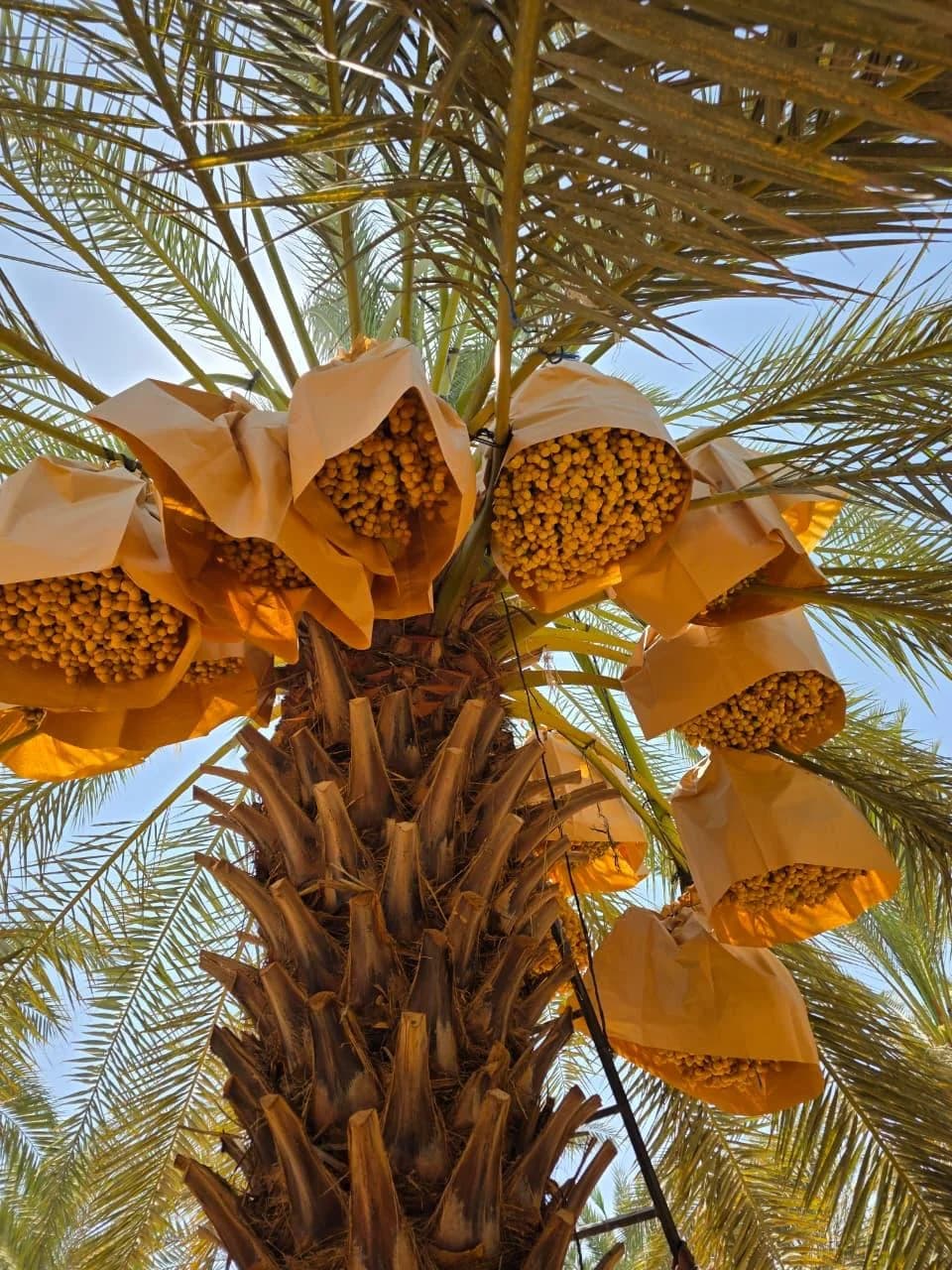
The farm is built on a system that makes it possible to track every palm from planting through harvest, so that knowledge of the product does not begin when it reaches the point of sale; it begins at its source inside the farm.
This gives us a different way of looking at date production. Instead of treating the crop as merely one quantity, production can be connected to the journey of the palms from which it came.
What does this mean for the buyer?
When choosing a date supplier, do not look only for someone who can tell you: “We have good dates.”
Look for a supplier who can explain where the dates came from, how they were managed, which specifications they can commit to, how they maintain quality, their ability to provide the required quantities, and what information they can provide about the product.
These details are what transform the purchase of dates from a transaction based merely on price and a sample into a supply relationship built on clear information and defined expectations.
This is precisely where the importance of having direct access to the product’s source becomes clear.
The MAP Trade approach: From the palm to the market
At MAP Trade, we start from the place where the date’s journey actually begins: the farm.
By tracking the palms from planting through harvest, we work to build greater visibility into the production journey, because we believe that knowing the product’s source and understanding what happens throughout its journey are an important part of building a clearer supply chain.
Our goal is not only to produce dates, but also to build a model through which the product can be connected to its agricultural source, the crop’s journey can be understood, and the way the farm is managed can continue to develop with every new season.
For the buyer looking for a date supplier, this means that the relationship begins with the product’s source itself, not only when the shipment arrives.
Because a good date does not begin at the packing stage; it begins at the palm.
If you are looking for a date supplier and want to learn about the available varieties, specifications, quantities, and supply options, you can contact MAP Trade to discuss your needs and market requirements.