The Role of Data in Modern Agriculture: How Does Data Help Farmers Make Better Decisions?
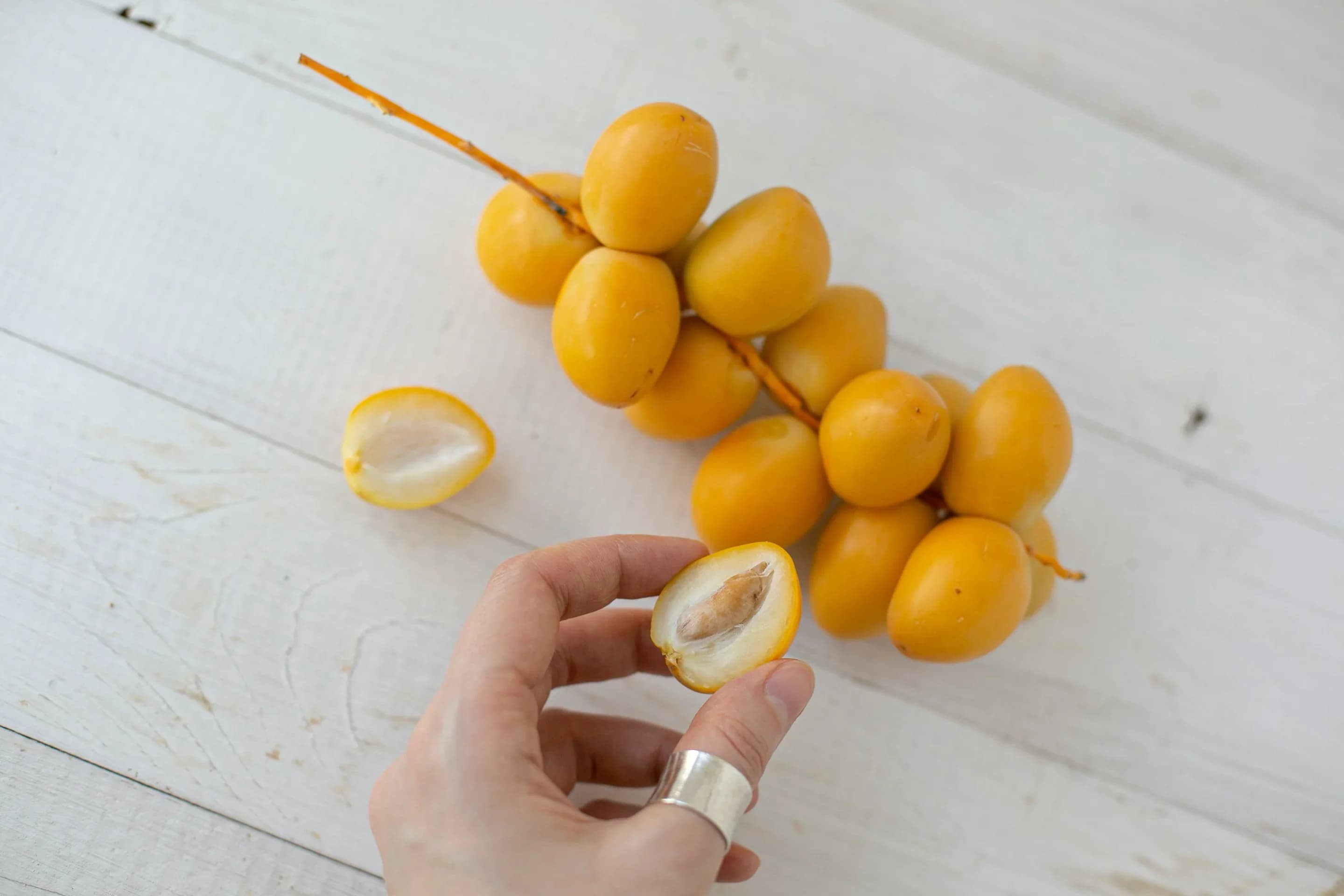
Two farms may grow the same variety of dates, in the same region, and use similar farming methods, yet achieve different results. What creates this difference?
Two farms may grow the same variety of dates, in the same region, and use similar farming methods, yet achieve different results. What creates this difference?
In many cases, the answer is not connected to a single factor. Soil quality, climatic conditions, water management, tree health, the timing of agricultural operations, and accumulated experience all affect the final result. However, there is an element that has become capable of connecting these factors in a way that was not previously possible with the same ease.
In traditional agriculture, a large part of decision-making depends on observation and the accumulated experience of the farmer and workers. This experience remains an essential element in the success of any farm, but data adds something different to it: it allows what happens to be recorded, compared, revisited, and used to make future decisions.
For this reason, data is no longer merely a set of records kept inside the farm. In modern agriculture, data has become part of the way the farm itself is managed.
From What Happened? to Why Did It Happen?
It is easy to know that a particular farm’s production declined in a certain season, but knowing the number alone does not answer the most important question:
Why did production decline?
Was the reason related to climatic conditions? Water management? The health of some trees? The timing of an agricultural operation? Or was there a difference between different parts of the farm? This is where the real value of data appears.
When different types of information are collected throughout the season, it becomes possible to connect results with the factors that preceded them instead of viewing the final result separately from the rest of the events. This is one of the basic principles behind Data-Driven Agriculture: using data is not about collecting the largest possible number of figures, but about turning them into information that supports understanding and decision-making.
FAO indicates that data-driven agriculture can support planning, monitoring, forecasting, traceability, process improvement, and market access, provided that the data is available, organized, and usable.
In other words, good data does not only tell you what happened; it can help you understand why it happened and what you can do next.
Data Gives the Farm a Memory
There is another value of data that may be more important in the long term: it gives the farm a memory.
The agricultural season ends, but the information collected during it can remain available. When a new season begins, farm management does not have to rely only on what the people who worked during the previous season remember.
Previous data can be revisited and compared with new data, differences can be observed, and patterns that may not be clear when looking at only one season can be identified.
This is particularly important in palm farming because trees are not a crop that is planted and harvested within a short period before everything starts again. A palm can continue producing for years, and therefore having a clear history of the data associated with it can become more valuable over time.
Every season adds a new piece of information, and as seasons accumulate, knowledge accumulates.
Why Is Data Alone Not Enough?
It may seem easy to say that a modern farm needs more data, but the truth is that more data does not necessarily mean better decisions.
If the data is inaccurate, disorganized, or collected without knowing how it will be used, it may become a burden instead of a tool that helps the farm.
For this reason, FAO points to the importance of suitable data infrastructure, information-processing capabilities, good connectivity, and human skills that allow digital solutions to be used effectively. The cost of technology, skills, and infrastructure can also represent barriers to the adoption of precision agriculture.
The question, then, is not:
How much data do you have?
It is:
What can you learn from the data you have?
This is where the difference begins between a farm that collects data and a farm that uses data.
From Soil and Climate Data to Irrigation Decisions
Water is a clear example of how data can change the way a farm is managed. Trees’ water needs are not necessarily constant at all times, and they can be affected by factors such as soil type, weather conditions, the plant’s growth stage, and the rate of evaporation.
For this reason, soil, weather, and surrounding-condition data can help build a more accurate picture of the farm’s needs instead of relying only on a fixed schedule.
A recent study on a date farm in Saudi Arabia showed how an IoT network can be used to collect data from sensors and analyze it to support irrigation decisions. The study found a 45% reduction in water-pump use in the system examined, providing a practical example of how data can move from being simple information to operational decisions with an economic and environmental impact.
The point is not that every farm needs to use the same system, but that agricultural decisions become more open to improvement when we know the conditions on which those decisions are based.
Data Helps Detect Differences Within the Farm
One of the biggest challenges in managing large farms is treating the farm as a single unit. However, a farm is not necessarily homogeneous. Soil may vary from one area to another, tree conditions may differ, and water needs, growth levels, or production may vary.
For this reason, precision agriculture relies on collecting and analyzing data that makes it possible to understand these differences instead of treating every part of the farm in the same way.
Modern agriculture uses different data sources, such as sensors, aerial imagery, satellites, geographic information systems, climate data, and others. FAO explains that integrating these sources can turn agricultural and geographic data into usable information for resource management and more targeted decision-making.
The farm then becomes more than one single area; it becomes a collection of zones and conditions that can be understood and managed more accurately.
Data and Palm Health
Data can also play a role in monitoring the health of palm trees.
Changes in a tree’s condition may not always be equally visible during the early stages. Sensors, imagery, and environmental and agricultural data can therefore provide additional information that helps detect and analyze changes.
In the palm sector, research using artificial intelligence and expert systems to analyze sensor data, support tree monitoring, and detect certain diseases and pests has increased. A scientific review published in 2026 analyzed 39 studies in this field and found promising results, but it also indicated that data quality and the ability of models to work under real-world and varying conditions remain among the most important challenges.
This point is very important because the value of any smart system begins with the quality of the data on which it relies. If the data is weak, decisions will not become better simply because AI or another advanced technology is being used.
Data Makes Traceability More Than Just Knowing the Source
The Traceability discussed in the previous article is fundamentally based on the existence of information that can be recorded and linked to specific stages of the product’s journey.
When you have data associated with the palm itself, traceability can become more detailed.
Instead of having only the information that the dates came from “a particular farm,” the traceability journey can begin at a more precise level within the farm.
This is one of the central aspects of the MAP Trade experience.
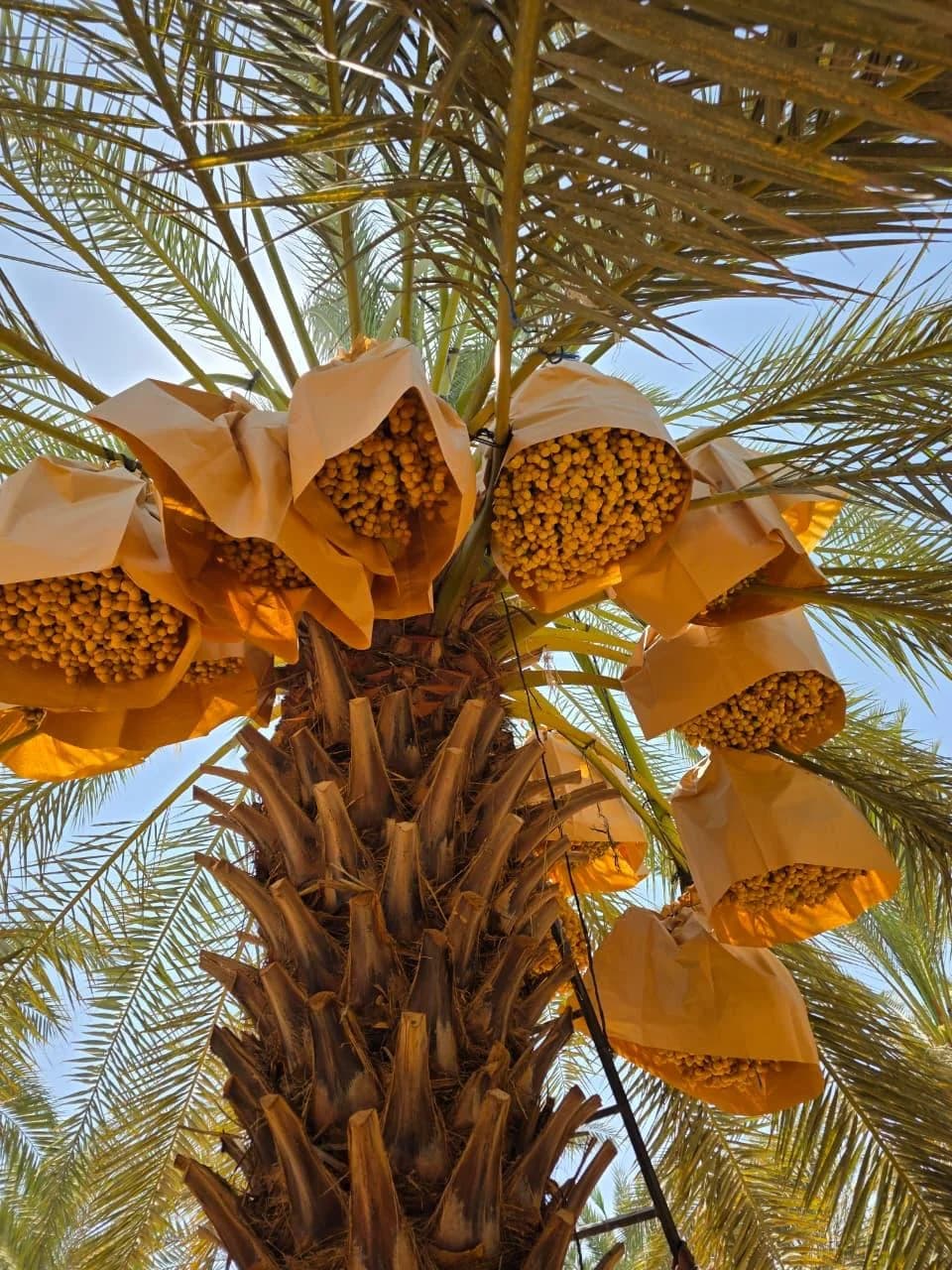
By tracking every palm from planting through harvest, the palm becomes a starting point that can be linked to the production journey. Over time, the information associated with this journey can accumulate and become part of the farm’s record.
Accordingly, traceability here is not merely a tool for telling the buyer the product’s source; it is also a means of building a digital memory for the farm.
When Data Becomes Knowledge
There is a difference between Data, Information, and Knowledge.
The production figure at the end of the season is Data.
When we connect it to the season and agricultural conditions, it becomes Information.
When we use accumulated information to understand patterns and improve decisions for the next season, it begins to become Knowledge.
This is the real value that modern agriculture seeks.
The farm does not need thousands of figures merely to say that it is Data-Driven; it needs a system that makes data understandable and usable.
For this reason, FAO indicates that digital transformation in agriculture is not about technology alone. It also requires suitable data systems, integration among information sources, and human capabilities able to turn this data into decisions.
Data Helps the Farm Plan for the Future
Data is not used only to know what is happening now. One of its most important values is the possibility of using it for planning. Historical data can help compare seasons, understand differences, identify recurring problems, and evaluate the results of previous decisions.
As analytical tools develop, data can also be used to build models that help predict certain future outcomes, although the accuracy of these models depends heavily on data quality and diversity.
This is why building a good database today can have greater value after several seasons, when you have a longer history that can be analyzed and compared.
What Does All This Have to Do with the Buyer?
Discussion of agricultural data may seem like an internal matter concerning only the farm, but its impact can ultimately reach the buyer.
The commercial buyer wants a dependable product, a clear source, stable quality, and the ability to meet market requirements. When a farm is more organized in collecting information and monitoring production, it may be better able to understand its products, deal with their variations, and improve its operations.
This does not mean that data alone guarantees higher quality or better supply. But it provides a foundation for making more evidence-based decisions instead of relying only on estimates. Here, data becomes part of the supplier’s value itself.
Why Does MAP Trade Start with Every Palm?
At MAP Trade, we do not view data as a collection of numbers separate from agriculture. We view it as a means of understanding the farm better.
For this reason, tracking every palm from planting through harvest is an essential part of the farm’s management approach.
Every palm has a journey, and every season adds new information. This information can become part of a continuous history that can be revisited and understood over time.
The idea is not that technology or data will manage the farm instead of agricultural expertise, but that data and expertise can work together.
Experience helps interpret what is happening, data helps document, measure, and compare it, and technology helps collect, organize, and analyze it.
This is the foundation on which a farm that is more prepared for the future can be built: the future of agriculture will not depend only on greater reliance on data, but on better data.
The Shift to Modern Agriculture Does Not Mean That Every Farm Must Use Dozens of Systems and Devices
The important thing is to know what information the farm needs, why it needs it, and how it will use it.
Irrigation data may be the priority on one farm, while tree-health, production, or traceability data may be more important on another.
For this reason, technology should begin with the problem, not the other way around. The goal is not to say that we have Sensors, AI, or Cloud Systems. The goal is to be able to answer questions that were previously difficult to answer:
- Where is the problem?
- When did it begin?
- What changed?
- What happened after the decision was made?
- Can we use what we learned to improve the next season?
When a farm can answer these questions better, data becomes more than information; it becomes a decision-making tool.
From Recording Data to Building Continuous Knowledge
The future of agriculture does not depend only on the ability to produce a larger crop, but also on the ability to learn from every season. Every palm can add a piece of information, every season can add an experience, and every decision can produce a lesson that can be used later.
This is the true role of data in modern agriculture: to make the farm capable of learning from its history, understanding its present, and preparing better for its future. At MAP Trade, this idea begins with the palm itself.
By tracking the palms from planting through harvest, we work to build a clearer record of the production journey, because we believe that knowing the product begins with knowing its source, and developing the future begins with understanding the data left by the past.
In the end, a smart farm is not the farm that collects the greatest amount of data.
It is the farm that knows what to do with that data.
If you are looking for a date source that cares not only about the final product, but also about tracking the production journey from the farm, contact MAP Trade to learn more about the farm, available varieties, and supply requirements.
(MAP Trade phone number)